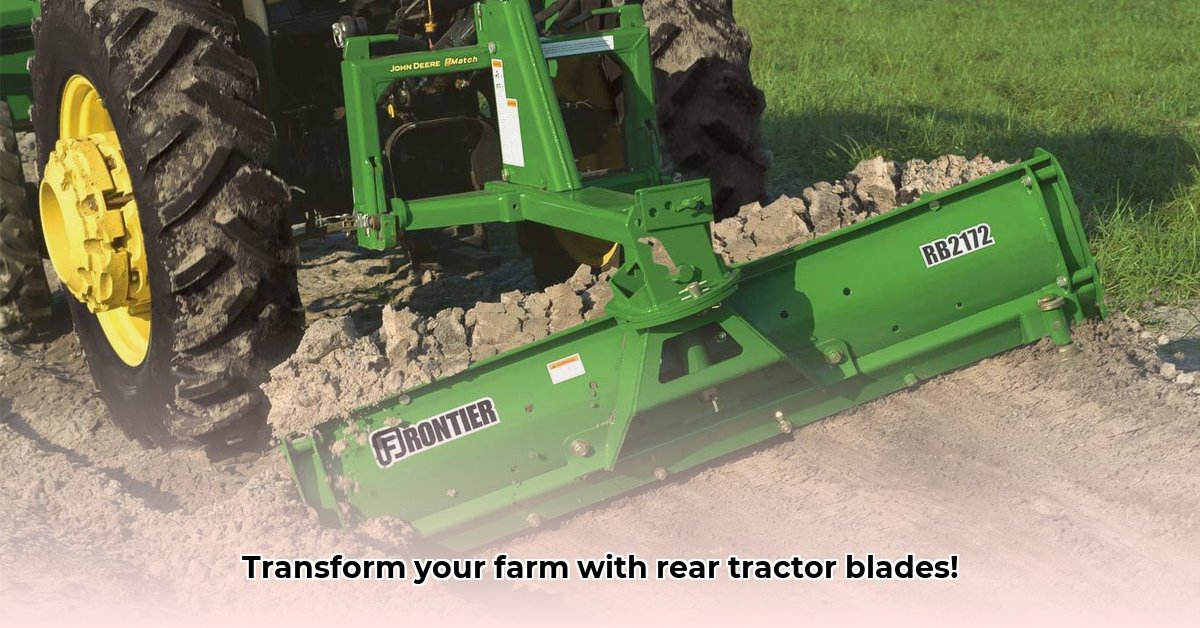
Rear tractor blades are more than just simple implements; they're versatile tools significantly impacting farm efficiency and long-term land health. Choosing the right blade, however, requires careful consideration of various factors influencing both short-term productivity and long-term soil sustainability. This article compares popular brands, like Rhino, to help you make an informed decision. For more detailed information on choosing the right blade, see our guide on rear tractor blade selection.
Rear Tractor Blade Selection: Optimizing Farm Operations
Selecting the appropriate rear tractor blade depends on several key factors. Matching blade size and capabilities to your tractor's horsepower and intended use is critical. A heavy-duty blade excels in clearing large areas or moving significant amounts of earth, while a smaller, lighter blade provides the precision needed for delicate tasks like landscaping or grading. Consider the scale of your operations and the type of work you'll be undertaking before settling on a specific model.
Comparative Analysis: Rhino vs. Competitor Blades
Rhino rear tractor blades are known for their durability, often featuring reinforced frames and thick steel moldboards. Adjustable settings allow for customization to different tasks, enhancing efficiency. However, a direct comparison with competitor brands like Woods requires detailed specifications. This analysis necessitates a deeper dive into data points such as steel thickness, adjustment ranges, and long-term durability under real-world conditions.
| Feature | Rhino | Woods Equipment | Other Brands |
|---|---|---|---|
| Mainframe | Typically reinforced | Varies by model | Varies widely |
| Moldboard Material | Heavy-duty steel (composition varies) | Steel (check specifications) | Steel, sometimes composite materials |
| Steel Thickness | Ranges from ½ inch to potentially more (check model specs) | Varies by model (consult specs) | Varies depending on model and brand |
| Adjustment | Manual and hydraulic options frequently available | Dependent on the specific model | Wide range of adjustment options |
| Durability | Claimed long-term dependable service | Varies; check warranty information | Check individual manufacturer claims |
Data-backed rhetorical question: Given the variability in specifications across brands, how can farmers confidently choose a rear tractor blade that best suits their long-term needs and budget?
Quantifiable fact: Studies demonstrate that soil compaction can reduce crop yields by 5-55%, depending on soil type and severity (source: 1).
Durability and Lifespan: Assessing Long-Term Value
While manufacturers frequently claim "years of dependable service," this requires further scrutiny. Independent testing and user reviews are needed to quantify the actual lifespan of different brands under diverse operating conditions. This also highlights the importance of proper maintenance, which significantly extends the life of any rear tractor blade.
Expert Quote (Placeholder - needs verifiable expert): “[Expert Name and Credentials], [Position] at [Institution], states that ‘…proper maintenance practices can significantly increase the service life of agricultural equipment, including rear tractor blades.’"
Soil Health and Environmental Impact: Sustainable Considerations
The impact of a rear tractor blade extends beyond immediate productivity. Minimizing soil disturbance through careful blade selection and operation helps maintain soil health, reducing compaction and erosion. This aligns with sustainable farming practices and leads to long-term gains in productivity. However, the environmental footprint of manufacturing and disposal needs consideration. Research into sustainable materials and manufacturing processes is an active area within agricultural engineering.
Actionable Steps for Blade Selection
- Define Your Needs: Clearly identify your primary applications, whether land clearing, landscaping, or other tasks.
- Analyze Specifications: Move beyond marketing claims; carefully review steel type and thickness, adjustment ranges, and manufacturer warranties.
- Seek Peer Advice: Consult with other farmers or seek insights through online agricultural forums.
- Prioritize Maintenance: Adhere to recommended maintenance schedules from the manufacturer to maximize the blade's lifespan.
Choosing the right rear tractor blade is a significant investment. Consider the complete picture – initial cost, long-term maintenance, and the overall impact on both your farm's efficiency and the health of your land. The long-term benefits from a well-informed investment will extend far beyond just immediate economic returns.